DAP hosts 67th APO Workshop Meeting, advances regional productivity cooperation
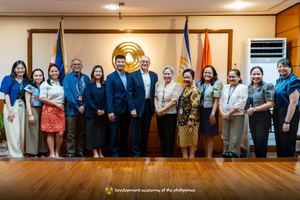
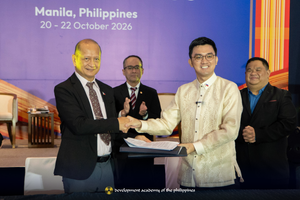
MANILA, Philippines — The Development Academy of the Philippines (DAP), as the National Productivity Organization (NPO) of the Philippines, hosted the Asian Productivity Organization’s (APO) 67th Workshop Meeting of Heads of National Productivity Organizations (WSM) from 20 to 22 October 2026 in Manila, bringing together NPO Heads and delegates from APO member economies to strengthen regional cooperation and advance productivity initiatives. The three-day meeting provided a platform for member economies to review progress in implementing the APO Strategic Partnership Program (SPP) Plan, exchange experiences and lessons learned, and discuss key programs and initiatives under APO Vision 2030. Discussions focused on translating strategic priorities into concrete activities, strengthening member ownership, and improving the delivery of measurable results. As host NPO, DAP supported the gathering of regional productivity leaders as they shared updates on their respective SPP Plan activities, including implementation approaches, challenges, and opportunities for closer collaboration. The meeting also reviewed activities undertaken in 2026 and planned initiatives for 2027. The inaugural session featured opening remarks by APO Director for the Philippines and Secretary of the Department of Economy, Planning, and Development Dr. Arsenio M. Balisacan; a statement by APO Secretary-General Dr. Indra Pradana Singawinata; and an inaugural address by guest of honor Kim Robert C. de Leon, Secretary of the Department of Budget and Management (DBM). In his opening remarks, Dr. Balisacan underscored the importance of aligning regional productivity initiatives with national development priorities, emphasizing that APO Vision 2030 provides a shared direction while the SPP serves as a framework for initiatives responsive to member economies’ needs. Dr. Indra highlighted the implementation of the SPP as a key focus of the meeting, noting its role in strengthening member ownership, making APO support more member-focused, and improving the delivery of measurable results. Secretary de Leon, meanwhile, emphasized that productivity should ultimately translate into tangible improvements in people’s lives, stating, “At the end of the day, the greatest achievement of productivity is prosperity that people can actually feel.” The inaugural session also featured the launch of the APO Guidebook on Green Productivity, the presentation of an APO Accreditation Body certificate recognizing the reaccreditation of the Mongolian Productivity Organization Certification Body for a second term through 5 December 2030, and the signing of a memorandum of understanding between DBM and DAP for the Public Financial Management Microcredentialing Program for Budget Officers and Analysts. The DBM-DAP partnership highlights the role of collaboration in advancing public sector capacity development through microcredentialing, complementing broader regional efforts to strengthen productivity and institutional capabilities. On the second day, delegates considered proposals and reports from the APO Secretariat on revisions to the APO Award Program, the proposed establishment of an APO training center, and updates to the APO Accreditation and Certification Program. Other agenda items covered the 2025 Annual Project Review, the performance of APO centers of excellence, the APO Liaison Officers’ Meeting, and APO Genuine AI Action activities. The WSM also carried historical significance for the Philippines. Manila hosted the Second Asian Round Table Productivity Conference in 1960, where the draft convention that became the APO Charter was adopted. On 14 April 1961, the Convention establishing the APO was signed in Manila by eight founding members, including the Philippines. The meeting’s return to Manila in the APO’s 65th anniversary year provided an opportunity to reflect on the organization’s foundations while advancing its priorities under Vision 2030. Through its role as the Philippines’ NPO, DAP continues to support the country’s engagement in regional productivity cooperation, knowledge exchange, and capacity development. Hosting the 67th WSM provided an opportunity to bring member economies together to discuss shared priorities and strengthen collaboration toward more productive and sustainable socioeconomic development. About the Development Academy of the Philippines The Development Academy of the Philippines is a government-owned and controlled corporation mandated to serve as a change catalyst and performance-driven institution for excellence in governance and public service. Through its programs and partnerships, DAP supports capacity development, productivity improvement, and institutional excellence in the public sector. About the Asian Productivity Organization The Asian Productivity Organization is a regional intergovernmental organization established in 1961 to improve productivity in the Asia-Pacific region through mutual cooperation. It supports its member economies through policy advisory services, capacity building, and knowledge sharing to promote sustainable socioeconomic development.